|

Proof
of the Existence of God
The Ingenious Numeration of Three Constants
Expanded Highlights of the Evidence
Illustrated in Document Alpha
Vasilios
Gardiakos
Throughout the many centuries
pi (π)
has been examined and dissected in countless ways. The
fascination with pi continues to the present. To this day no one has
noticed anything unusual about pi.
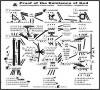
When I was eighteen years I noticed the 3_4_5 right at the start
of pi. I thought it odd that the Pythagorean triplet would begin
right at the start of pi but gave it no more thought. Years later I
noticed the 1_1_2 at the start of the square root of two and thought that
this discovery was strange. These two oddities both at the same
position fanned my curiosity. During the many years of
examining pi (π),
√2
and S I found that
these three constants have a very odd interwoven relationship
which I illustrate in
Document A.
These
what I call oddities
could not have been made by chance alone on pi, our most popular
constant,
√2
and S so therefore must been made intentionally.
If these oddities are the result of chance alone then one should
expect these oddities to appear on many random numbers. This is not
the case.
Only one entity could manipulate these
three constants to produce oddities that we can detect. Only one entity
could do this specifically on these three constants
and not on other numbers. It seems
that
God
not only could but has formed the geometry of space and
even defined the fundamentals of mathematics. He ingeniously
manipulated the geometric fabric and the default mathematics of the
universe so that we can detect and analyze the oddities and conclude
that only a great intelligence can accomplish this and therefore we can
know that God
exists.
Note:
Document A may look complicated but it is not! It
is fairly simple to understand. Any one with a little knowledge of
math can understand it. The many arrows on Document Alpha though
they may look confusing or distracting are there to point or reference the numbers.
The highlights below are discussed step by step in detail to explain the
oddities. Once
you understand Document Alpha you will realize its significance.
1) Pi
(pi = 3.141592653...)
starts with 3_4_5 which is the smallest Pythagorean Triplet possible
forming the Pythagorean triangle. This triplet, 3_4_5 can be
recognized as the representation of the
Pythagorean Theorem. Also in pi the sequence 1_ _2_ _3. In
√2
early the sequence1_2_3 and 4_ _3_ _2.
2) In pi, 31, 41 and 59 are primes
(3.1 41 59...). No formula has been discovered that will produce all
the prime numbers however 41 + n squared + n, 59 + 4n
squared + 4n and
31 + 2n squared + 4n are three most productive formulas known
to yield prime numbers. Both 41, 59 and 31 are used. See 5)
bellow. Right at the start of pi there are three very productive
prime number generators, 31, 41 and 59. What are the odds of this
happening by chance?
The great mathematician's Leonhard Euler's formula 41 + n squared + n
turns out to be surprisingly good for large values of n. A computer
showed that for the primes under ten million, the formula generated
primes 47.5 percent of the time. The formula works even better for
lower values of n. For values of n under 2,398, there's' an even
chance of getting a prime. And for values under 100 the formula
yields 86 primes and only 14 composite or non-prime numbers.
For n=0, the formula yields the prime number
41. For n=2, the prime number 47. Indeed, as n takes on successive
values from 0 to 39, Euler's formula yields nothing but primes.
Stanislaw Ulam, a well known and respected
mathematician and his coworkers discovered another prime generating
formula that is almost as good as Euler's.
The formula 59 + 4 n squared + 4n has a success rate of 43.7
percent.
Steve Homewood a determined and ingenious mathematician based in the U.K. announce on
March 7, 2009 that he had solved the
A31 problem. He discovered the
formula 31 + 2n squared + 4n generates prime numbers 43.5% of the
time for all answers up to 10,000,000. So as he says “So, no, 31 has
not been overlooked”.
3) In pi, 31, 41 and 59 oddly their
prime order, being the 11th, 13th and
17th primes are themselves primes. More oddly 11, 13 and 17 are consecutive primes.
Working with 11, 13 and 17, oddly
1+1+1+3+1+7=14 and 11+13+17= 41 (3.14159...). One more
oddity, in 11, 13, and
17, 1+1=2, 1+3=4 and 1+7=8 a 2-4-8 progression. Also 31+ 41+ 59=131
and 3+1+4+1+5+9= 23, both sums are prime numbers.
4) Pi
starts with the
prime number
31 which is also a
Mersenne Prime. The cube root of
31=3.141380652 which is within .00675% of pi. The first 8 digits of
pi 3+1+4+1+5+9+2+6=31 also 1+4+1+5+9+2+6+3=31. There is no zero in
the first 31 digits of pi. Note, 1+2+4+8+16=31 and
(from 16=31) 16x31=496. The third
perfect number
is 496.
5) Odd
that pi starts with 314159 and its
mirror image 951413 are both prime numbers. About 1 in 7 primes is
the reversal also a prime.
These are the
four known pi forward primes:
3, 31, 314159 and 31415926535897932384626433832795028841
So in addition to 314159 being a reversible prime it is also a rare
pi forward prime.
A lesser oddity, the first
even number in pi, 314 divided by two equals 157 which is a prime.
Also 14, an even number divided by two equals 7, a prime.
6) Pi = 3.14159265358979323... It is
very odd that a group of eight small different contiguous primes: 3,
14159, 2, 653, 5, 89, 7, 9323 are right at the start of pi. Many and
possibly infinite small (numbers with five or fewer digits) and
large (greater than five digits) different contiguous primes may
exist after 9323. As it turns out right after the 9323 prime the
next contiguous prime is: 846264338327........303906979207, it is
3057 digits long. So if pi started with 8462... the first prime
would be 3057 digits long. See:
http://www.primepuzzles.net/problems/prob_018.htm
It will be interesting to see how many digits
the average contiguous prime has. Perhaps more interesting may be to find how scarce are groups
consisting of eight small contiguous primes of which none of the
prime numbers are duplicated.
7)
Starting
with the first digits in
√2, 1_1_2_3;
the first digits in S, 8_6_2_9 and the first digits in pi, 2_5_4_3 (3_4_5_2
inverted) are prime numbers.
8) Pi
and
√2 have the 2653, 3562
cross-mirroring and the 141,414 cross-symmetry at DEF/2. (see alphanumeric locators on the sides of
Document A)
The mathematical block at E/3 reveals several vertical and diagonal
oddities. The repeating "88" ties pi
and
√2
to S.
9) In
√2 (√2= 1 .4 1 4 2 1 3 5 6
2 ...) early 1+_2+_3=_6. Not only does it equal 6, a perfect number but this is an example of
how to derive the first perfect number
which is 6. Again
in √2
early14+14=28, 28 being the second perfect number. Furthermore sum
of the digits 1+4+1+4 = 2+8 = 10 which is the fourth
triangular number.
10)
√2
starts with the
Fibonacci sequence 1_1_2_3 in which 11, 23 and 1123
are primes.
Also note:
√2 = 1 .4 1 4 2 1 3 5 6 2 3
7 3...
Fibonacci sequence: 1, 1, 2, 3, 5, 8,
13...
In √2
the
Fibonacci sequence is included: 1,
1, 2, 3, 5, 8(6+2), 13(3+7+3).
Very odd that seven numbers of the Fibonacci sequence are found at
the start of the square root of 2.
11)
The 1_1_2 in
√2 is in an identical position right at
the beginning as the 3_4_5 in pi. Both 3,4,5 and 1,1,√2
can be represented by a triangle. See
Document A.
12)
√2
has a strong
7 occurrence. Many consecutive numbers add up to multiples of
7. In
√2
early 14-21-35 are multiples of 7.
Note that 22/7 equals
pi within 0.04025%. See G/1-9 on Document A.
13) S (Side=)
starts with 88. Numbers 88, 8 and 8 are prominent in 62(6+2=8) and
26(2+6=8) add up to 88 and are in a sense self-referential. At DF/12 Pi and
√2 also refer to 88: 62+26=88,
the 62 from √2
and the 26 from pi oddly 6226 is found in S. Pi and √2 refer to 88: 35+53=88. See more 88 oddities on Document
A.
14)
The 22 oddity: 11, 22 and 88 figure prominently in
pi, √2 and S.
Also 88 is present in some way in all three constants and is a multiple of 11 and 22.
15) S=.886226925
886 22 6925
8+8+6=22=6+9+2+5
Also interesting: 88+6=94=69+25 also 69-25=44=2x22
16) S=.886226925, so that 886, 862, 622, 226,
692 (odd numbers are ignored):
abc-cba=d, d/x=22
886-688=198, 198/9=22
862-268=594, 594/27=22
622-226=396, 396/18=22
226-622=-396, -396/18=-22
692-296=396, 396/18=22
abcdef, abcdef/x=22
886226, 886226/40283=22
fedcba,
fedcba/x=22
622688, 622688/28304=22
263538, 263538/11979=22
17) The initial consecutive digits in pi,
√2 and S
can add
up to 41 (pi=3.141...):
pi: 1+4+1+5+9+2+6+5+3+5 = 41
√2:
4+1+4+2+1+3+5+6+2+3+7+3 = 41
S: 8+8+6+2+2+6+9 = 41
Multiply 41 by 3 (the three constants) which is equal to 123. Now 1+2+3=6 which
is a perfect number.
18) Very strange
the E-5 mathematical block is the result of the "1415" or 14-15 in
Pi
and
"4142" or 41-42 at identical
place relative to the decimal point on
√2. This block
contains several vertical and diagonal and prime number oddities.
19)
More Oddities:
All
the oddities are not listed here.
Review
Document A for
additional head scratching.
Click here to see your Document A - Your
Questions Answered by Vas.
===========================
Conclusion
The "oddities"
explained above is
the evidence that
proves
that
God
intentionally numerated the three
constants so that we can become
aware that
He exists.


     
Check out the criticism:
Page 1
Page 2
Page
3
To Page 4
===========================
And Now For
The Fun Stuff
On a Humorous Note (S=886226925):
It takes 62 muscles to frown
and only 26 to smile.
Conserve your energy and SMILE!
(I am pushing things a bit here)
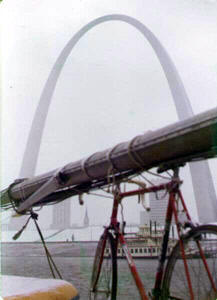
Photo V. Gardiakos - My 1973 trip to New Orleans
On a Telephone Note:
The telephone area code of St Louis
home of The Gateway Arch is 314
and has a zip code of 63141
(I am pushing things a lot here)
On a Musical Note (S=886226925):
88
represents the 88 keys of a piano.
(now this is ridiculous connection so I
include it only to extract a smile from you.
Use your 26 muscles!) :-)
Notes:
A. All of the underlined hyperlinks
in this page are
not in the typical blue but are in the color of this font.
B. "_" The under score represents a digit
in the sequence that is not shown. Sometimes I underscore a digit
for emphasis. The underscore under a number does not indicate that it
is a hyperlink.
C. Pi (π)
is the ratio of the circumference of a circle to its diameter.
Pi is the most well known non-integral mathematical constant. Pi
is equal to 3.141592653... which is infinitely long. Pi
shows up in many equations where you don't expect it. It is the 16th letter
of the Greek alphabet.
D. √2 =
1.414213562373... ("√2"
is the mathematical representation of square root of two)
E. S=0.886226925... which is 1/2 times the square
root of pi. It is gamma(3/2), and is sometimes also
called (1/2)! the factorial of 1/2. Herein "S" is used for "side" for
the sake of convenience.
F. Mersenne Primes: 2, 3, 5, 7, 13,
17, 19, 31, 67, 127, 257 ... They become more rare as the value
increases.
G. 22/7=3.142857... = pi within 0.04025%. The first theoretical
calculation of a value of pi was that of Archimedes of Syracuse
(287-212 BCE), one of the most brilliant mathematicians of all time.
Archimedes worked out that 223/71 < π <
22/7. Interestingly 22/7 is also a member of the continued-fraction series for pi.
Continued fraction approximations can be used to get "optimal"
rational approximations for any number. By "optimal" we mean the
closest approximation that is possible with a given-size numerator
and denominator. The continued fraction approximations for π are:
3/1, 22/7, 333/106,
355/113, 103993/33102,
104348/33215, 208341/66317,
312689/99532, 833719/265381,
1146408/364913, ...
H. 7 is the smallest number whose reciprocal has a pattern of more
than one repeating digits: 1/7 = 0.142857142857... It is also
the smallest number for which the digit sequence is of length N-1
(the longest such a sequence can be). The next such numbers are 17,
19, 23, 29, 47, 59, 61, 97, 109, 113, ... (Sloane's integer sequence
A006883)
I. 7 is considered "lucky" by many people and given much spiritual
significance. The early religious and cultural use of the 7-day week
almost certainly arose from the fact that the moon goes through its
4 phases in a bit over 28 days, which divides nicely into 7 days per
phase.
These man made numeral references may be part of numerology however
they are excluded as being significant or relevant in the oddities
of Document A.
J.
What is a prime number?
A prime number is a positive integer
that has exactly two positive integer factors, 1 and itself. For
example, if we list the factors of 28, we have 1, 2, 4, 7, 14, and
28. That's six factors. If we list the factors of 29, we only have 1
and 29. That's 2. So we say that 29 is a prime number, but 28 isn't.
Another way of saying this is that a prime number is a whole number
that is not the product of two smaller numbers.
Note that the definition of a prime
number doesn't allow 1 to be a prime number: 1 only has one factor,
namely 1. Prime numbers have exactly two factors, not "at most two"
or anything like that. When a number has more than two factors it is
called a composite number.
Here are the first few prime
numbers: 2, 3, 5, 7, 11, 13, 17, 19, 23, 29, 31, 37, 41, 43, 47, 53,
59, 61, 67, 71, 73, 79, 83, 89, 97, 101, 103, 107, 109, 113, 127,
131, 137, 139, 149, 151, 157, 163, 167, 173, 179, 181, 191, 193,
197, 199, etc.
Prime numbers sequences are useful
as they do not occur in nature. Only intelligent beings can create a
prime number sequence. In the search for extra terrestrial intelligence any
detection of a
prime number sequence will be recognized as being created by
a intelligent beings.
Mirror prime or
reversible prime number or emirp (prime spelled backwards) is a
prime that gives you a different prime when its digits are
reversed.
K. A31
Prior to March 6, 2009 only
Euler's (1707 - 1783)
41 + n squared + n and Ulam's (1909
- 1984)
59 + 4n squared + 4n
simple
polynomial
formulas were known to be very
productive in generating prime numbers. Since pi starts
with 3.14159... and if God intentionally numerated pi with 41 and 59
as prime number generators then it is logical that 31 could also be used to
do likewise.
Steve Homewood a very talented mathematician based in the U.K. took
up the painstaking task to
solve the
A31 problem
and March 6, 2009 announce that he had done so!
Referring to my question
"Has 31 been overlooked in the search for other productive numbers?"
Homewood replied with “So, no, 31 has not been overlooked”.
He discovered the
formula 31 + 2n squared + 4n generates prime numbers 43.5%
of the time for all answers up to 10,000,000. There are other simple polynomial prime number
generators but are not as productive as these three.
Nothing to do with A31 and thus not
significant but nevertheless interesting oddity: 31,
331, 3331, 33331, 333331, 3333331, and 33333331
are all prime numbers. But the pattern is broken with the next
number in this sequence: 333333331 is not prime.
Back to 2)
L.
What is the Fibonacci Sequence?
Fibonacci Sequence:1, 1, 2, 3, 5, 8, 13, 21, 34 ... The Fibonacci
series is formed by starting with 0 and 1 and then adding the latest
two numbers to get the next one. Each number is the sum of the
previous two. Surprisingly, Fibonacci numbers can be used to
calculate pi.
M.
What is a perfect number?
A perfect number is a number that it
is equal to the sum of its own divisors (other than itself).
Examples:
6 = 1 + 2 + 3
28 = 1 + 2 + 4 + 7 + 14
N. What is a triangular number?
A triangular number or Tetraktys is the number of dots that may be
arranged in an equilateral triangle: 1, 3, 6, 10, 15, 21, 28, 36...
In general n(n + 1)/2.
O. What is the definition of "oddity"
when referring to Document A?
Oddity defined: abnormal unusual strange atypical extraordinary
surprising amazing weird uncommon unexpected unusual unpredicted
unforeseen remarkable notable noteworthy.
In
Document A
"oddities" refers to simple unexpected occurrences that include
prime numbers, Fibonacci sequence, perfect numbers, Pythagorean
triplet etc. One could write countless unique equations to fit every
irrational or random number and call it an oddity. This force to fit
technique is not used in Document A. It is important to find simple
oddities as there are limits to simplicity like counting, adding,
subtracting and multiplying. Complexity has not limits. I suspect it
is more difficult to numerate simple oddities as opposed to complex
ones as complexity allows you an unlimited course of action. All the oddities found in
Document A are of the simple
type. No complex equations, complex algorithms or complex
formulas are used to find the
oddities. Perhaps natural rather than contrived may be a way
to describe the 19 or so oddities in the webpage.
Another reason simple oddities are more relevant is because they
are easier to be spotted and recognized as such. If the oddities are
intentional then they should be easy to spot or what would be the
sense of numerating them in the first place?
One oddity may be noteworthy but additional oddities make it
significant. The more oddities the more noteworthy and significant it is. The 19 or
more oddities in Document A is enough evidence to conclude that a
powerful intelligence namely God numerated pi.
By the way one equation that many
mathematicians would agree is an oddity is e^(i*pi)=1. To further
clarify, I use "oddity" with a similar meaning.
Comment:
God herein means the Pythagorean God
and not any of the Gods of the various religions.





______________________________________________________


Copyright
2006
V. Gardiakos |